
Rapid Weight Loss, GLP-1 Drugs, and Your Face: What Skincare Can—and Cannot—Change
A calm guide to facial and skin changes noticed during substantial weight loss, including GLP-1 treatment: what skincare can help, what it cannot replace, and when to speak with a clinician.
3 min read By Dr. Lurie Science Skin After 40 #Skin After 40 #Skin Health #Skin Science #Patient Education #Skincare

Concern explainer
“Ozempic face” is a nickname, not a diagnosis
People can notice a leaner or more hollow-looking face after substantial weight loss. GLP-1 medicines are one setting in which substantial weight loss may occur, but the appearance itself does not tell you what medication someone takes or whether anything is medically wrong.
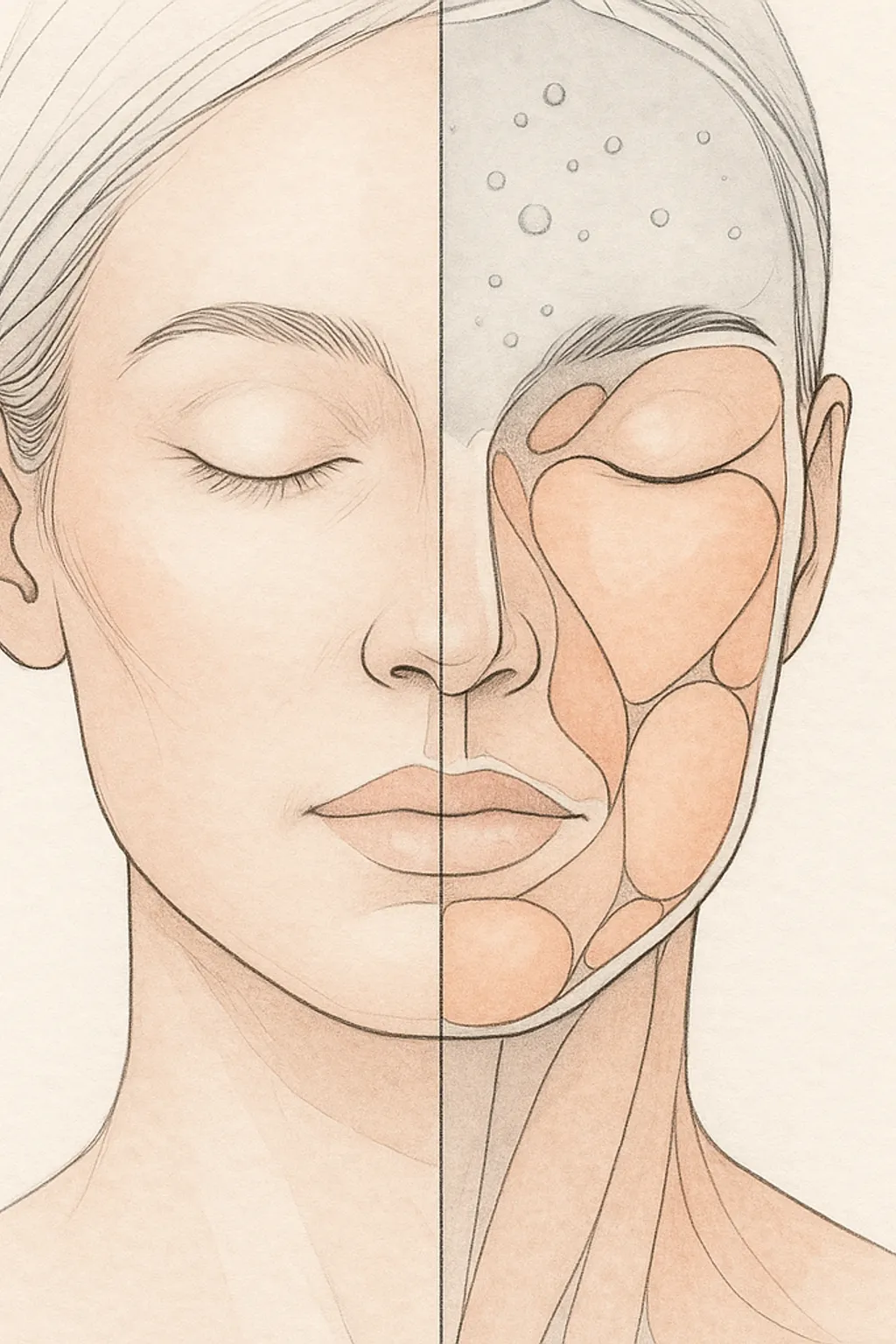
The first useful distinction is anatomical: facial fat contributes to contour and support. Losing body fat can therefore change facial shape. That is different from saying the skin barrier is “damaged” or that a cream can put lost volume back.
What is happening underneath
A face is not a flat sheet of skin. Bone, fat compartments, muscle and skin all contribute to its shape. When body weight changes substantially, the amount and distribution of subcutaneous fat can change too.
Age matters because skin and deeper facial structures also change over time. A change that feels sudden may therefore be a combination of weight loss, baseline facial anatomy and ordinary age-related change rather than a new condition caused by one product or one medication.
What a sensible skincare routine can do
If weight loss coincides with dryness or sensitivity, keep the routine boring: gentle cleansing, regular moisturizer and sunscreen you tolerate. If you already use a retinoid, do not increase it simply because your face looks different.
Skincare can improve hydration, comfort and some surface signs of photoaging. It cannot replace soft-tissue volume. That boundary can save a lot of money.

The bottom line
A leaner face after substantial weight loss is often better understood as a change in facial volume and contour than as “skin damage.” Volume is not the same thing as skin quality.
Use skincare for what skincare can reach: comfort, hydration, photoprotection and selected surface concerns. Keep medication decisions, nutrition concerns and procedural options with the appropriate clinician.
Sources
Prescription Medications to Treat Overweight & Obesity — National Institute of Diabetes and Digestive and Kidney Diseases.
How to care for your skin in your 60s and 70s — American Academy of Dermatology.
Topical tretinoin for treating photoaging: A systematic review of randomized controlled trials — International Journal of Women’s Dermatology / PubMed.
Collagen Supplements: What the Trials Actually Measured — Dr. Lurie Science.
One useful next read
If your question is mainly about changing skin after 40 rather than medication, start with the broader guide.