
Can Five Minutes of Face Massage Really Change Your Face?
Do face rollers, gua sha and facial massage really lift the face? A clear look at early research, short-term changes and limits.
4 min read By Dr. Lurié Skincare Editorial Skin After 40
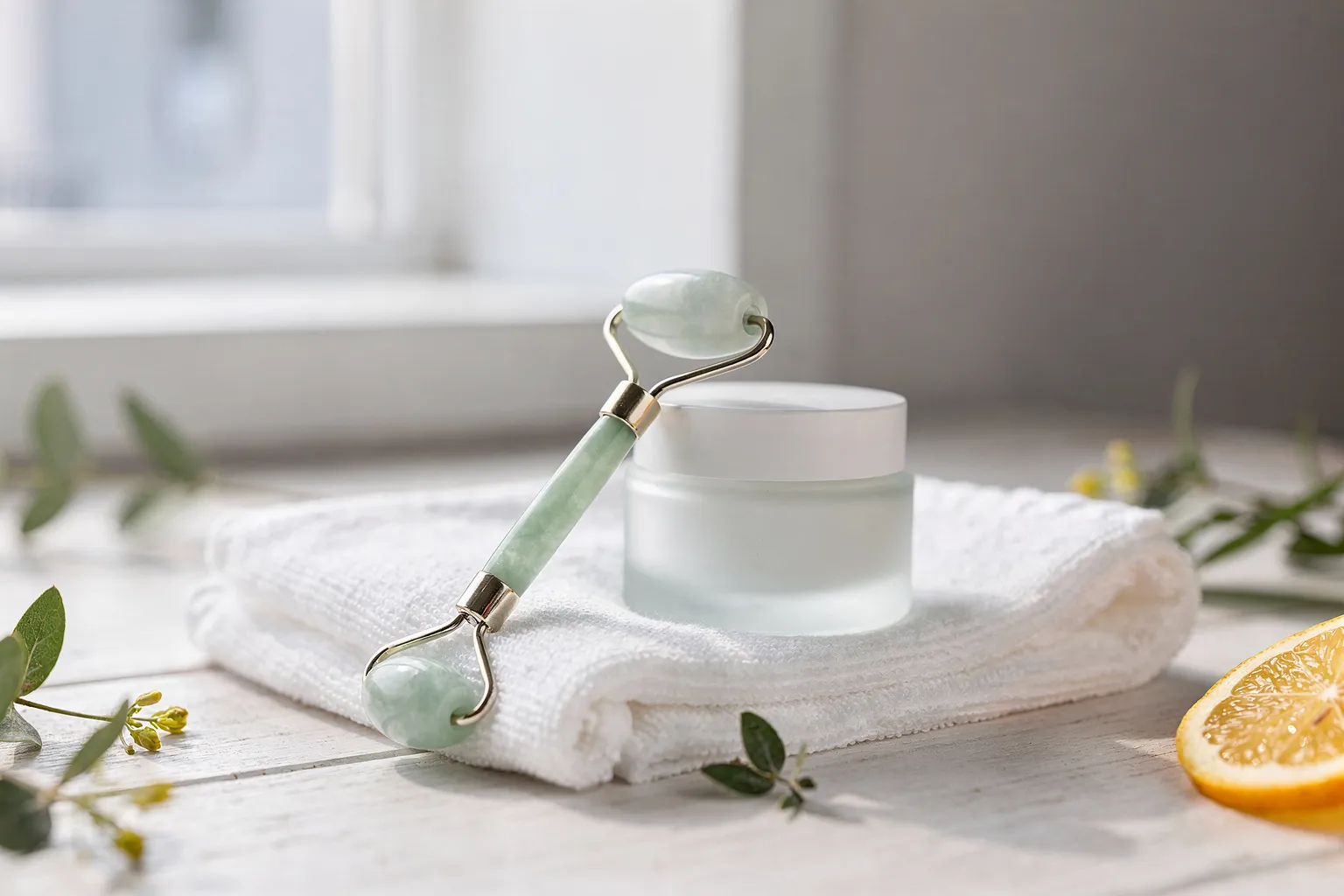
Five minutes, one smooth stone and a video promising a sharper jawline. In the before image, the face looks ordinary. In the after image, it looks subtly more sculpted. The demonstration is satisfying—and the change seems remarkably quick.
But the video quietly combines three different ideas: massage can feel pleasant; it might temporarily change the appearance of puffiness; and it can permanently lift a face. Those claims are not interchangeable.
What the tools actually do
In modern beauty routines, a facial roller or gua sha tool moves across lightly lubricated skin. Contact, movement, pressure and sometimes cooling can change how skin feels. Some people enjoy the ritual even without a visible result.
Gua sha also has historical roots in traditional Chinese practice. Those practices are not identical to present-day beauty tutorials, and historical use should not be presented as clinical proof of cosmetic lifting.
De-puffing isn't rebuilding a face
A temporary change in surface fluid or skin appearance is different from growing new collagen, replacing facial fat volume or lifting supporting tissues. These processes occur at different depths and on different time scales.
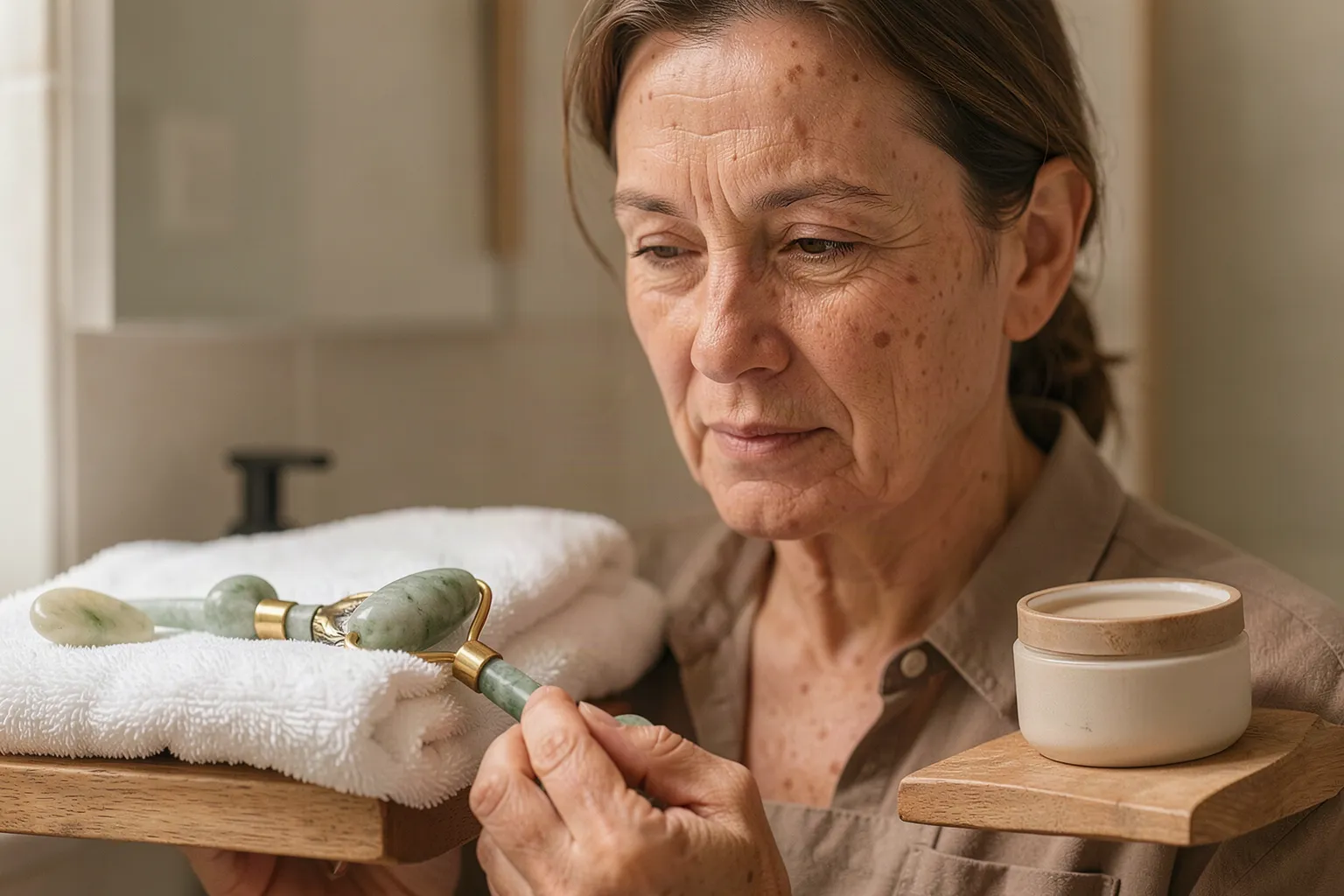
After midlife, facial appearance reflects changes in elasticity, fat distribution and structural support, as well as lighting and day-to-day hydration. A roller cannot reasonably be expected to reverse all those changes in a five-minute session. A different photograph after massage is an observation, not proof of lasting anatomical change.
What one clinical study found
In a 2025 randomized study, researchers compared facial rollers with gua sha among 34 women aged 20–50. Participants performed ten-minute sessions five times weekly for eight weeks. Investigators reported changes in some measured facial-contour, muscle-tone and elasticity outcomes.
That is interesting early evidence. It does not establish that a single brief treatment creates a lasting facelift, nor can a small study involving younger and middle-aged adults predict results in every person over 60. What happens after the routine stops is another question.
The larger evidence picture
A 2025 systematic review examined twelve studies including 321 women aged 30–70 across several mechanical approaches, including massage and facial exercise. Some studies found localized changes, but the reviewers concluded that evidence was insufficient to establish these methods' rejuvenating effectiveness with confidence.
Small samples, different techniques and variable measurements make the results hard to pool. The review was not twelve identical gua sha trials, so it would be misleading to pretend it was.
Three phrases worth translating
'Instant lift' may describe a short-lived change in appearance—not a repositioned anatomical structure. 'Collagen boost' requires direct evidence of meaningful collagen changes, not merely warm or pink skin. 'Lymphatic detox' mixes a real physiological system with an often-vague marketing claim: there is no good basis for suggesting a face stone extracts mysterious toxins.
A useful question is: what was measured, in whom, after how many sessions, and for how long did the effect persist?
A reasonable way to enjoy massage
If gentle facial massage feels pleasant, you need not stop. Use clean tools, light pressure and enough slip to avoid dragging skin. Do not massage broken, inflamed, painful or infected areas. Stop if irritation appears. People with unexplained swelling or recent procedures should seek individual medical guidance before trying vigorous massage.
And if you do not enjoy the ritual, you are not missing an essential skincare treatment.
The five-minute conclusion
A comforting ritual can be valuable without proving permanent rejuvenation. The science leaves room for modest, short-term or localized effects; the marketing often leaps toward long-term lifting.
Enjoy the massage if it agrees with your skin. Save the surgical promises for claims that have surgical-strength evidence.